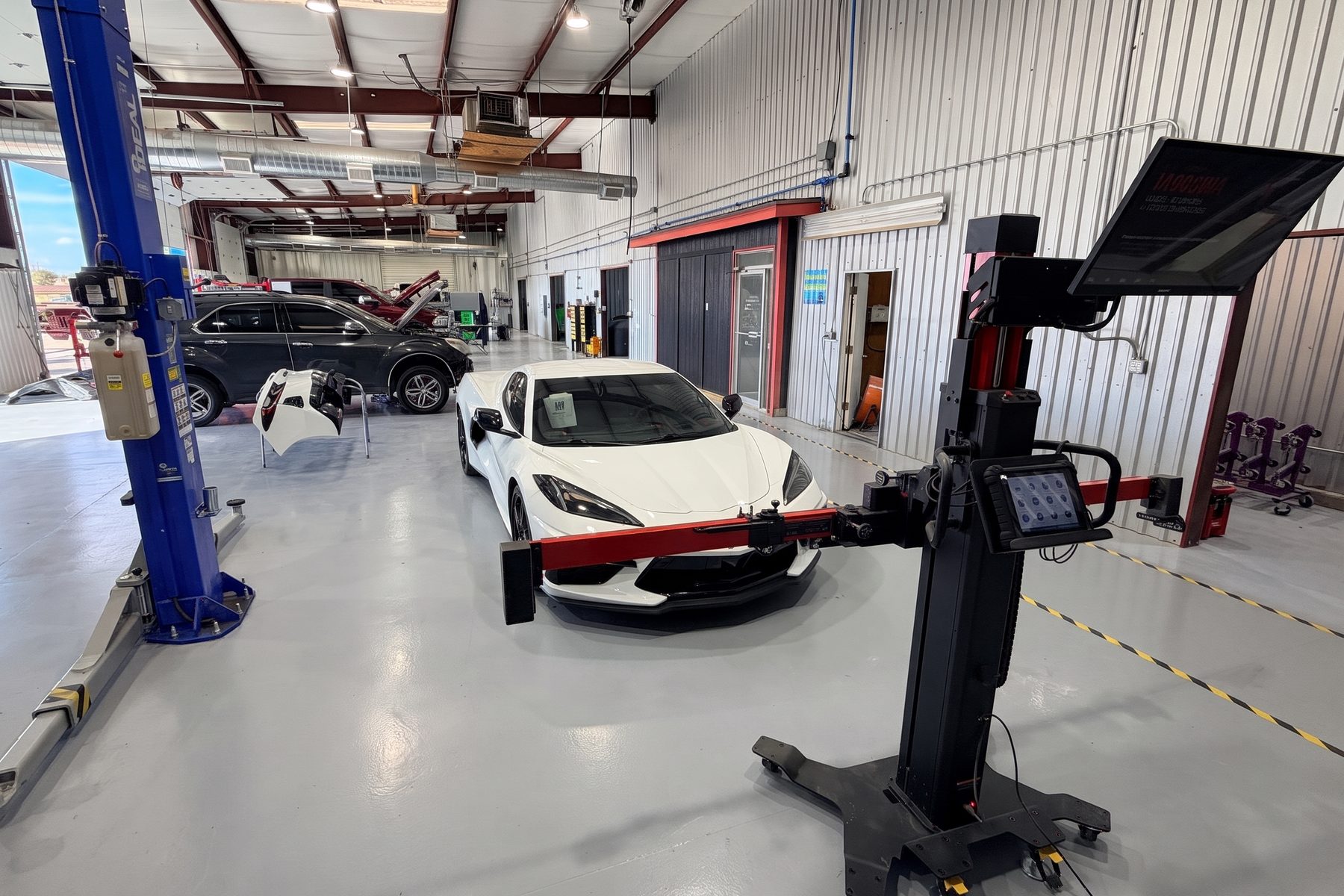
The dash lights are off. The car drives straight. The repair looks perfect. And the forward camera that decides when to brake for a stopped truck on I-20 is aimed two degrees to the left, because somebody replaced the windshield and nobody recalibrated it.
What ADAS is
Advanced driver-assistance systems: automatic emergency braking, lane keeping, adaptive cruise, blind-spot monitoring, rear cross-traffic alert, parking sensors. Nearly every vehicle built since 2018 has several. They work from cameras behind the windshield, radar behind the front and rear bumpers, ultrasonic sensors in the bumper covers and cameras in the mirrors and tailgate.
Why a collision repair disturbs them
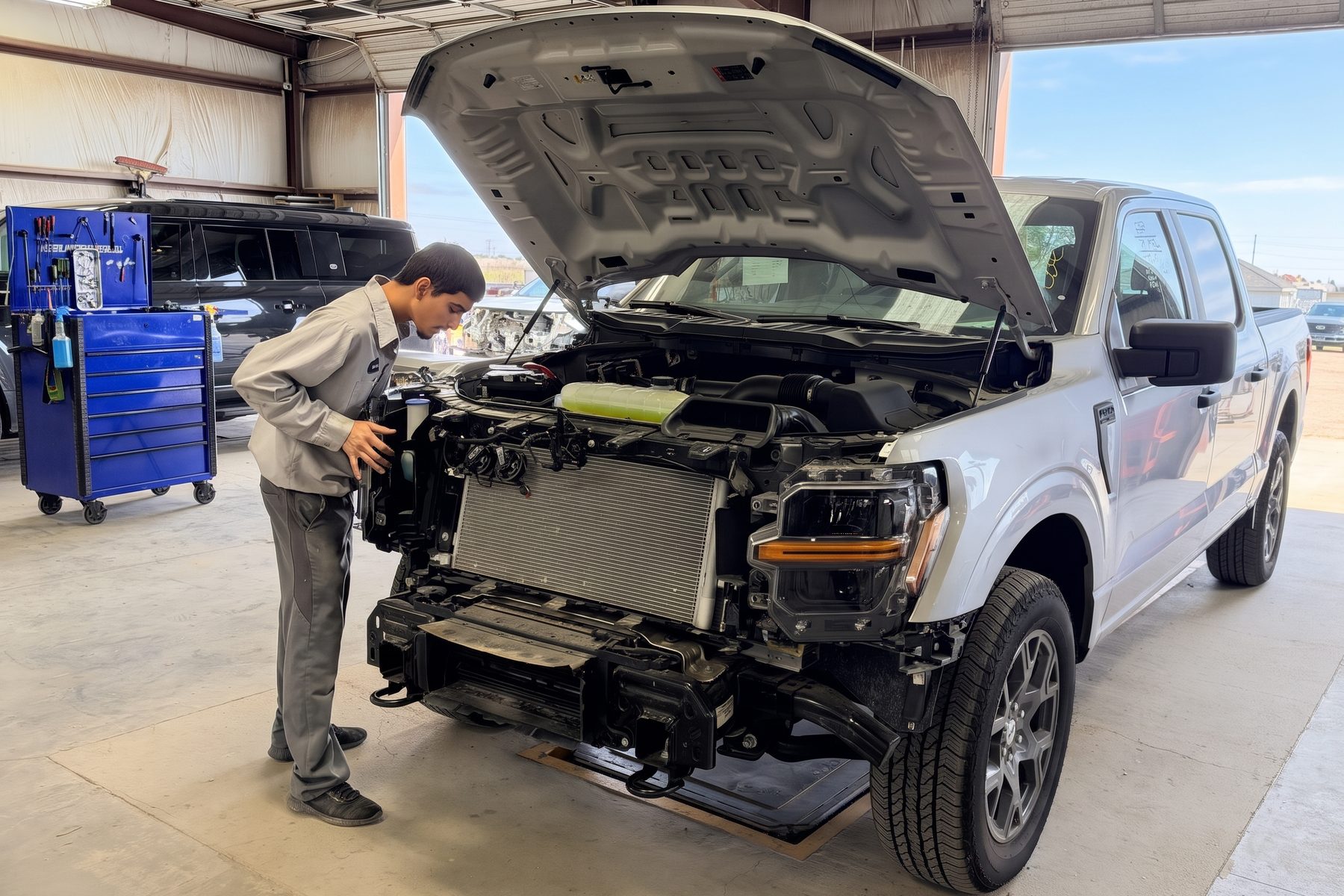
Every one of those sensors is aimed at the factory to a tolerance of a fraction of a degree. Remove a bumper cover and reinstall it: the radar bracket moved. Replace a windshield: the camera moved. Pull a quarter panel back to measurement: the blind-spot radar moved. Even an alignment changes the vehicle's thrust angle, which the forward camera references. The manufacturer's procedures say exactly which operations require a calibration afterward, and the list is longer than most people expect.
Static, dynamic, or both
- Static calibration happens in the shop: the vehicle sits level on a measured floor, manufacturer-specific targets are placed at exact distances and heights, and the scan tool runs the aiming routine.
- Dynamic calibration happens on the road: the scan tool is connected while a technician drives a prescribed route at prescribed speeds until the system learns its references.
- Many vehicles need both. Some need the static step repeated if the first attempt doesn't converge.
Why we do it in-house
Sending a car across town for calibration adds days and a second shop's judgment to your repair. Our ADAS bay has the level floor, the target sets and the Autel equipment to do it here, and the technician who calibrated it is the one who repaired it. The pre-repair scan, the post-repair scan and the calibration report go in your file, because an insurer, a future buyer and your own peace of mind all want the same proof.
The question to ask any shop
"Which calibrations does the manufacturer require for this repair, and can I see the report?" If the answer is "it didn't throw a code," the car wasn't calibrated. Codes tell you a sensor failed. They don't tell you it's aimed wrong.